As tech adoption for health, safety increases, professional accountability still essential – panel

Panellists during Creamer Media’s 'Health and Safety' webinar discuss South Africa’s evolving and complex health, safety and security landscape, unpacking the role of technology across various sectors.
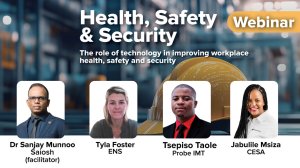


While organisations are increasingly adopting technologies to improve workplace health, safety and security, employers and qualified professionals remain responsible for ensuring compliance with safety standards.
This was a topic of discussion during Creamer Media’s ‘Health and Safety’ webinar, held on May 13.
Facilitated by South African Institute of Occupational Safety and Health (SAIOSH) president Dr Sanjay Munnoo, the expert panel unpacked South Africa’s evolving and complex health, safety and security landscape, highlighting the role of technology across various sectors.
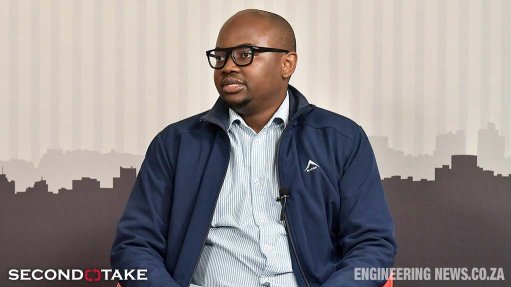
Panellists included Consulting Engineers South Africa (Cesa) VP Jabulile Msiza, legal firm ENS mine and occupational health and safety practice executive Tyla Foster and mining productivity and safety solutions company Probe IMT digital mining solutions product specialist Tsepiso Taole.
“Technology can improve decision-making, but accountability still rests with qualified professionals who interpret that data, who validate those outputs and ensure designs comply with safety standards and regulatory requirements.
“So technology is all great, but the increasing use of digital systems also creates higher expectations around proactive risk identification and predictive maintenance, real time reporting – because everything is available now – and transparent oversight,” said Msiza, arguing that technology should, therefore, be viewed as an enabling tool rather than a substitute for professional responsibility.
Hence, while AI models and digital monitoring systems are being used, Msiza noted that professional engineers must still exercise oversight, independent judgment, ethical responsibility and rigorous quality assurance.
“In many respects, digital transformation strengthens accountability because it improves traceability, documentation and visibility into decision-making processes.
“It becomes more difficult for failures, omissions and non-compliance to go unnoticed when projects are digitally monitored and recorded in real-time. So both are important, but professional accountability doesn't end”.
From a legal perspective, Foster outlined two main pieces of legislation regulating health and safety in South Africa, namely the Occupational Health and Safety Act and the Mine Health and Safety Act.
She explained that the fundamental objective of both pieces of legislation was to ensure the health and safety of employees and other persons who might be affected by the operation’s health and safety to as far an extent as reasonably practicable.
Employers thus have an obligation to identify hazards and then eliminate and minimise the risks associated with that work, thereby reinforcing the objective of ensuring health and safety in the work environment.
Foster, meanwhile, explained that, while technology could help mitigate health and safety risks, legal liability in terms of health, safety and security still sits with the employer.
Hence, she urged organisations to integrate several measures to ensure safety in the workplace, as opposed to relying on one safety measure.
“When an incident happens, the employer will have to show and demonstrate that it complied with this obligation.
“Regardless of whether or not the system is automated or AI driven, the liability remains; there will still be this duty on employers to demonstrate this, as well as on employees too.”
Taole agreed on the issue of accountability, reiterating that technology should be used as an enabling tool to make operations safer and to promote zero harm.
From a technological point of view, he expressed that continuous real-time monitoring systems could allow mines and employers to better monitor workplace hazards rather than relying on periodic and manual measurements, thereby enabling mines to detect risks as they developed.
With this in mind, Probe IMT supplies intelligent sensors that continuously monitor environmental conditions such as gas concentrations, airflow, ventilation performance and airborne pollutants.
“Our approach is very simple and straightforward. We aim to basically monitor continuously and alert immediately, respond faster and keep detailed records.”
Taole recommended adopting technologies that were scalable and adaptable to different mine layouts. He also recommended systems that were interoperable and able to integrate with other existing systems or infrastructure in the operations.
Meanwhile, Munnoo expressed that technology significantly enhanced workplace health and safety and security by enabling proactive risk management, real-time monitoring and faster response to hazards.
“Organisations that adopt modern technologies create safer environments, protect employees and improve overall operational efficiency,” he said.
Article Enquiry
Email Article
Save Article
Feedback
To advertise email advertising@creamermedia.co.za or click here
Research Reports

Projects


Latest Multimedia

Latest News

Showroom

Complete range of security sealing solutions including security seals bags and labels.
VISIT SHOWROOM


Press Office
Announcements
What's On
Subscribe to improve your user experience...
Option 1 (equivalent of R125 a month):
Receive a weekly copy of Creamer Media's Engineering News & Mining Weekly magazine
(print copy for those in South Africa and e-magazine for those outside of South Africa)
Receive daily email newsletters
Access to full search results
Access archive of magazine back copies
Access to Projects in Progress
Access to ONE Research Report of your choice in PDF format
Option 2 (equivalent of R375 a month):
All benefits from Option 1
PLUS
Access to Creamer Media's Research Channel Africa for ALL Research Reports, in PDF format, on various industrial and mining sectors
including Electricity; Water; Energy Transition; Hydrogen; Roads, Rail and Ports; Coal; Gold; Platinum; Battery Metals; etc.
Already a subscriber?
Forgotten your password?
Receive weekly copy of Creamer Media's Engineering News & Mining Weekly magazine (print copy for those in South Africa and e-magazine for those outside of South Africa)
➕
Recieve daily email newsletters
➕
Access to full search results
➕
Access archive of magazine back copies
➕
Access to Projects in Progress
➕
Access to ONE Research Report of your choice in PDF format
RESEARCH CHANNEL AFRICA
R4500 (equivalent of R375 a month)
SUBSCRIBEAll benefits from Option 1
➕
Access to Creamer Media's Research Channel Africa for ALL Research Reports on various industrial and mining sectors, in PDF format, including on:
Electricity
➕
Water
➕
Energy Transition
➕
Hydrogen
➕
Roads, Rail and Ports
➕
Coal
➕
Gold
➕
Platinum
➕
Battery Metals
➕
etc.
Receive all benefits from Option 1 or Option 2 delivered to numerous people at your company
➕
Multiple User names and Passwords for simultaneous log-ins
➕
Intranet integration access to all in your organisation